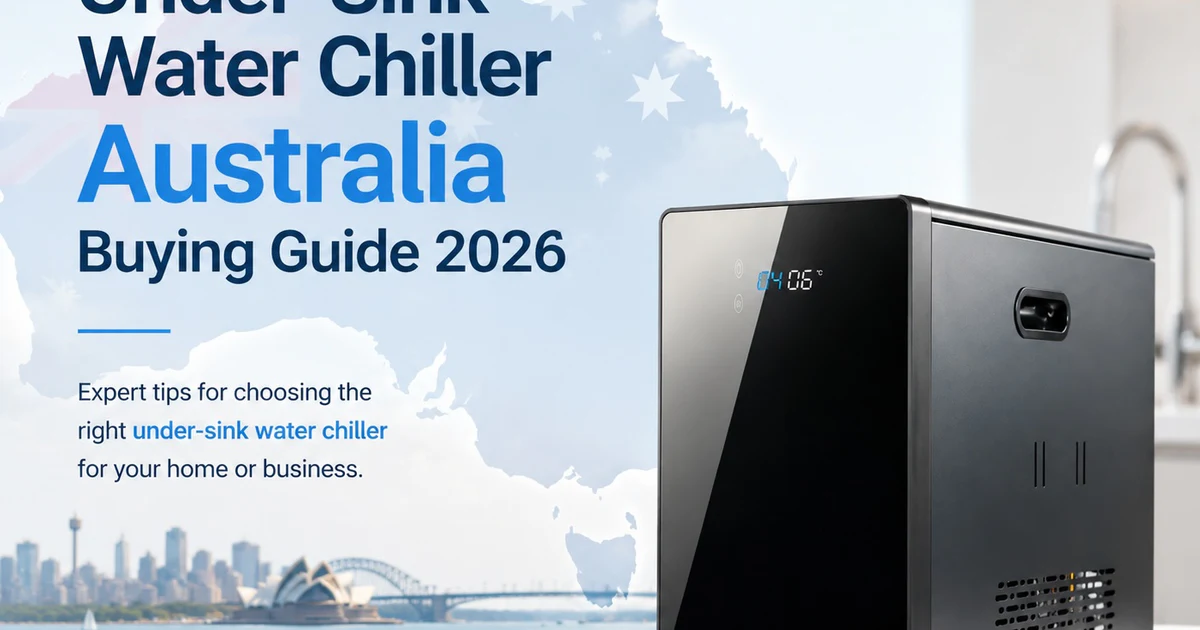
Under-Sink Water Chiller Australia Buying Guide 2026 | CoolerFridges
//Under-Sink Water Chiller Australia Buying Guide 2026
Solution Guide · 解决方案July 31, 2026·4 min read
Under-Sink Water Chiller Australia Buying Guide 2026
Specify the right under sink water chiller for Australian sites in 2026: capacity, 240V power, 150–700 kPa pressure, CO₂ sparkling, and plumbing compliance handled by your licensed installer.
Specifying an under sink water chiller for an Australian site in 2026 is less about finding the single "best" brand and more about matching capacity, power, and compliance to the venue. This guide walks specifiers, plumbers, and procurement teams through the decisions that actually affect performance and total cost of ownership.
What an Under-Sink Water Chiller Does
An under sink water chiller sits inside the cabinet, out of sight, and delivers chilled (and often hot or sparkling) water through a dedicated faucet on the benchtop. It saves counter space and consolidates what used to be three appliances into one point-of-use system.
Key Specifications to Specify
Cooling capacity (L/h)
Capacity is the single most important number. A small office kitchenette may need 2–5 L/h; a busy café or gym needs 10–30 L/h or more. Underspecifying causes warm output during peak use.
Temperature range
Most chilled outputs sit at 4–15°C. If you serve sparkling, the carbonation chamber typically runs 4–14°C to hold CO₂ in solution.
Tank material
304 or 316 stainless steel is the standard for food-contact water paths. Avoid unspecified plastics in the cold chain.
Power configuration
Australian sites use 240V/50Hz single-phase for point-of-use units; larger commercial systems may use 415V three-phase. Confirm the rating before scheduling an electrician.
Pressure and fittings
Typical incoming water pressure is 150–700 kPa, with 12.7mm (1/2") BSP thread connections common. Verify against the site's mains before install.
Installation Considerations for Australian Sites
Licensed plumber. In Australia, the water connection must be carried out by a licensed plumber. They will use WaterMark-certified fittings and compliant materials for the potable water path.
Ventilation. The compressor dissipates heat; the cabinet needs airflow or the unit runs hot and loses efficiency.
Space planning. Allow for unit dimensions (commonly 140–320mm wide, 300–400mm deep) plus CO₂ cylinder clearance if sparkling is specified.
Filtration. RO or ultrafiltration depends on incoming water quality; specify based on a site water test.
Certification Reality for Australian Buyers
Two points are frequently confused:
The chiller appliance itself is typically evaluated against electrical and material standards (look for CE, RoHS, CB, ISO 9001 from the manufacturer).
The plumbing connection in Australia falls under WaterMark requirements, handled by your licensed installer using certified fittings.
When sourcing an OEM/ODM unit, request the manufacturer's certificates and confirm the unit is configurable for Australian 240V power — the plumbing compliance is then managed at install by your plumber.
Cost Factors Beyond the Sticker Price
Energy use. Compressor class and tank insulation drive the running cost more than the purchase price.
Serviceability. Modular designs let you replace a cooling or filtration module instead of the whole unit.
Branding. Private-label OEM programs shift cost upward on tooling but down on per-unit retail margin.
Matching the System to the Venue
Venue
Recommended capacity
Notes
Office kitchenette
2–5 L/h
Still + hot typically sufficient
Café / restaurant
10–20 L/h
Add sparkling for menu drinks
Gym / wellness
10–30 L/h
High peak demand, size up
Aged care
5–10 L/h
Prioritise reliability and service
Frequently asked questions
What capacity under sink water chiller do I need for an Australian office?
For a standard office kitchenette, 2–5 L/h covers tea, coffee, and drinking needs. Size up if you expect continuous use or shared floors.
Does an under sink water chiller need a licensed plumber in Australia?
Yes. The potable water connection must be installed by a licensed plumber using WaterMark-certified fittings. The appliance configuration (240V, pressure rating) is confirmed with the supplier beforehand.
What power supply does an under sink chiller use in Australia?
Point-of-use units are configured for 240V/50Hz single-phase. High-capacity commercial models may use 415V three-phase — confirm on the specification sheet.
Is sparkling water available from an under sink system?
Yes, when specified with an integrated CO₂ carbonation module. It delivers chilled, hot, and sparkling water from one tap.
Which manufacturing certifications matter for an OEM supplier?
Request CE, RoHS, CB, and ISO 9001 certificates. They cover electrical safety, material compliance, and manufacturing quality control.
Frequently Asked Questions
What capacity under sink water chiller do I need for an Australian office?
For a standard office kitchenette, 2–5 L/h covers tea, coffee, and drinking needs. Size up if you expect continuous use or shared floors.
Does an under sink water chiller need a licensed plumber in Australia?
Yes. The potable water connection must be installed by a licensed plumber using WaterMark-certified fittings. The appliance configuration (240V, pressure rating) is confirmed with the supplier beforehand.
What power supply does an under sink chiller use in Australia?
Point-of-use units are configured for 240V/50Hz single-phase. High-capacity commercial models may use 415V three-phase — confirm on the specification sheet.
Is sparkling water available from an under sink system?
Yes, when specified with an integrated CO₂ carbonation module. It delivers chilled, hot, and sparkling water from one tap.
Which manufacturing certifications matter for an OEM supplier?
Request CE, RoHS, CB, and ISO 9001 certificates. They cover electrical safety, material compliance, and manufacturing quality control.